

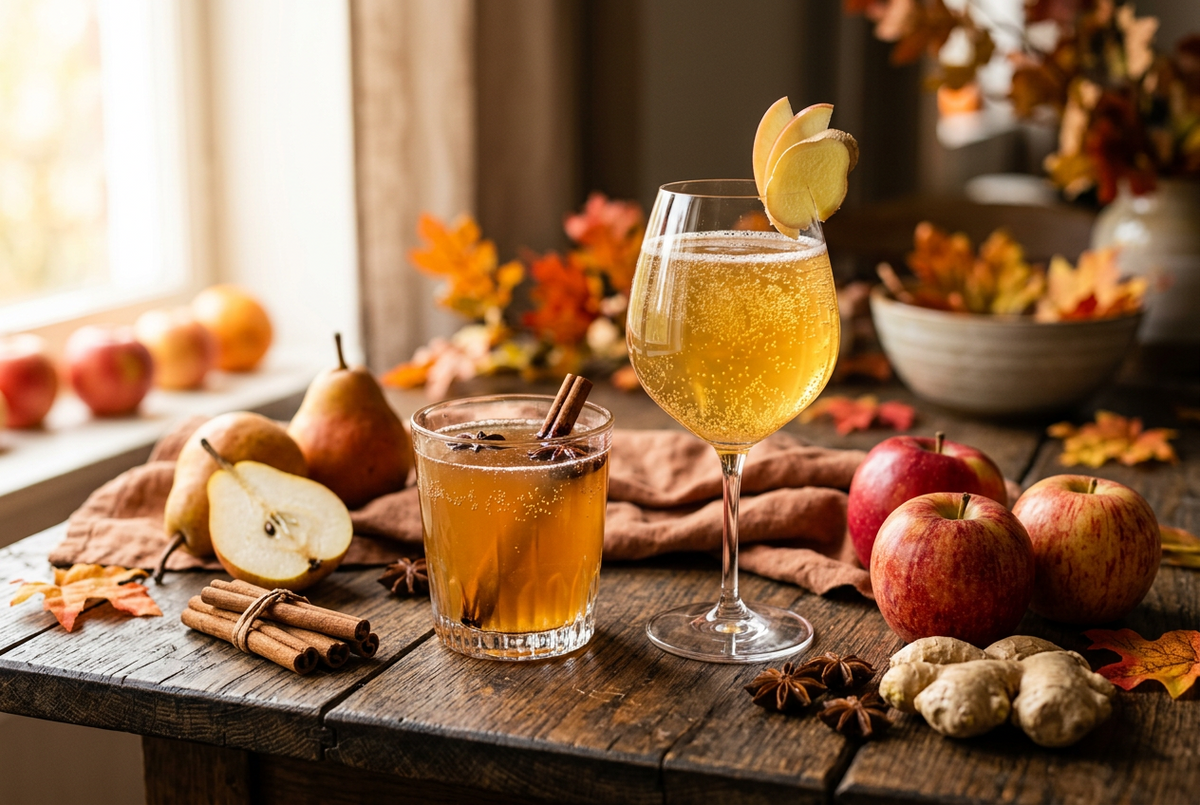

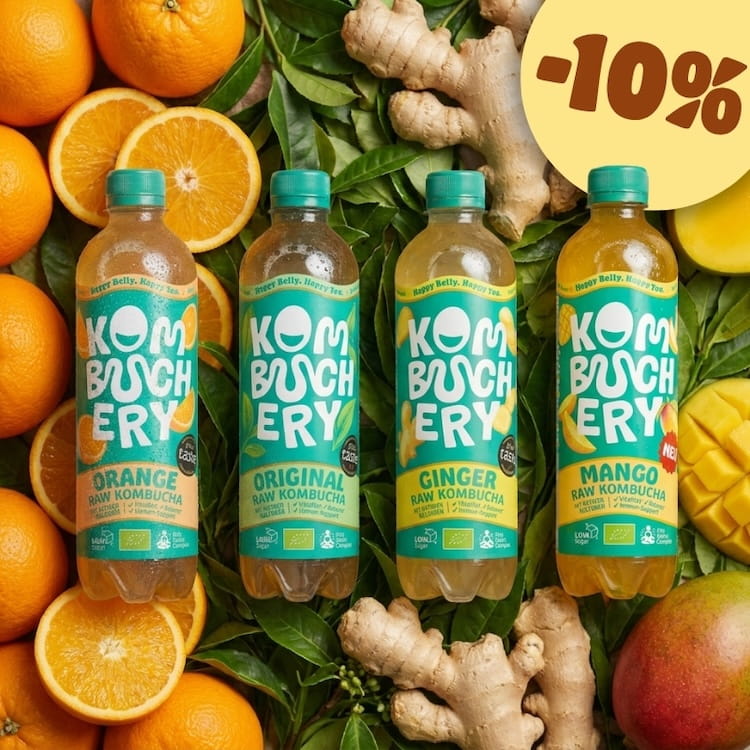
When the days get shorter, the air outside smells of autumn, and we make ourselves cozy at home, a little autumn can also move into the glass. 🍂 How about fruity apple, juicy pear, a pinch of cinnamon, and a delicate note of ginger? Kombucha is the perfect base for creating special drinks for the golden season.
In this article, I’ll show you 5 autumnal kombucha recipes that you can easily make at home. Whether fruity and fresh, spicy, or with a delicate herbal note – there’s something here for every taste. The recipes are quick to mix, require no complicated ingredients, and bring variety to your autumn routine.
Why kombucha is perfect for autumn
Kombucha is a fermented tea drink with a pleasantly tart, often slightly fizzy note. This combination makes it an exciting base for autumnal drinks. Apple, pear, cinnamon, ginger, and other spices complement its flavor in completely different ways.
While apple and pear bring a natural fruitiness, spices such as cinnamon, cardamom, and ginger provide an autumnal aroma. With fresh herbs or a splash of lemon, you can add exciting accents.
The best part: You don’t need elaborate syrups or special equipment. With ready-made kombucha, fresh fruit, and a few spices, you can create creative drinks in no time for cozy afternoons, brunch, or the next evening with friends.
1. Apple-Cinnamon Kombucha – the autumn classic
Apple and cinnamon simply belong in autumn. Whether in a cake, in porridge, or as warm apple juice – the combination immediately evokes cozy autumn feelings. In this recipe, the fruity sweetness of the apple meets the delicate tartness of kombucha. Cinnamon rounds off the drink aromatically.
Ingredients for 1 glass
- 200 ml Original kombucha
- ½ small apple
- ¼ tsp cinnamon
- 1 tsp freshly squeezed lemon juice
- Optional: 1 tsp maple syrup for a little more sweetness
- A few ice cubes to taste
Preparation
- Wash the apple, remove the core, and cut it into small pieces.
- Puree the apple pieces with the lemon juice and cinnamon. If you want a finer consistency, you can strain the puree through a small sieve.
- Put the apple puree in a glass and top it up with kombucha.
- Stir gently so that as much carbonation as possible is preserved.
- Garnish the drink as desired with a thin apple slice and a pinch of cinnamon.
My tip: For a particularly intense aroma, you can briefly warm the apple in a pan beforehand and then let it cool. This gives your kombucha a slightly caramel-like apple note.
2. Pear-Ginger Kombucha – fruity with a delicate kick
Pears are wonderfully juicy in autumn and bring a mild sweetness. Together with ginger, an exciting contrast is created: The pear provides a soft fruitiness, while the ginger gives the drink a pleasantly spicy note.
Ingredients for 1 glass
- 200 ml Ginger kombucha
- ½ ripe pear
- 1 small piece of fresh ginger (approx. 1 cm)
- 1 tsp freshly squeezed lemon juice
- Optional: a few fresh mint leaves
Preparation
- Wash the pear, remove the core, and cut the flesh into small pieces.
- Peel the ginger and grate it finely.
- Puree the pear, ginger, and lemon juice together. Strain the mixture through a sieve if necessary.
- Put the puree in a glass and slowly pour in the chilled Ginger kombucha.
- Stir everything gently and garnish the drink with mint or a thin pear slice.
My tip: Do you prefer it milder? Then use only a small amount of ginger and a particularly ripe pear. If you like it spicier, you can add a little more fresh ginger.
3. Apple Chai Kombucha – spicy and aromatic
Do you love chai tea and autumnal spices? Then you should definitely try this combination. Cinnamon, cardamom, and a pinch of cloves meet fruity apple and fizzy kombucha. The result is an aromatic drink that is particularly well suited for a cozy afternoon.
Ingredients for 1 glass
- 200 ml Original kombucha
- ½ small apple
- ¼ tsp cinnamon
- 1 pinch ground cardamom
- 1 very small pinch ground cloves
- 1 tsp lemon juice
- Optional: 1 tsp maple syrup
Preparation
- Wash the apple, remove the core, and puree the flesh with the lemon juice.
- Mix the apple puree with cinnamon, cardamom, and cloves.
- Put the mixture in a glass and slowly fill it up with kombucha.
- Stir gently and taste the drink. If you like it sweeter, you can add a little maple syrup.
- Garnish it with a thin apple slice and a small pinch of cinnamon.
My tip: Spices can quickly become dominant. Therefore, it is better to start with small amounts and work your way up to your favorite blend. Cardamom and cloves, in particular, are intense in flavor.
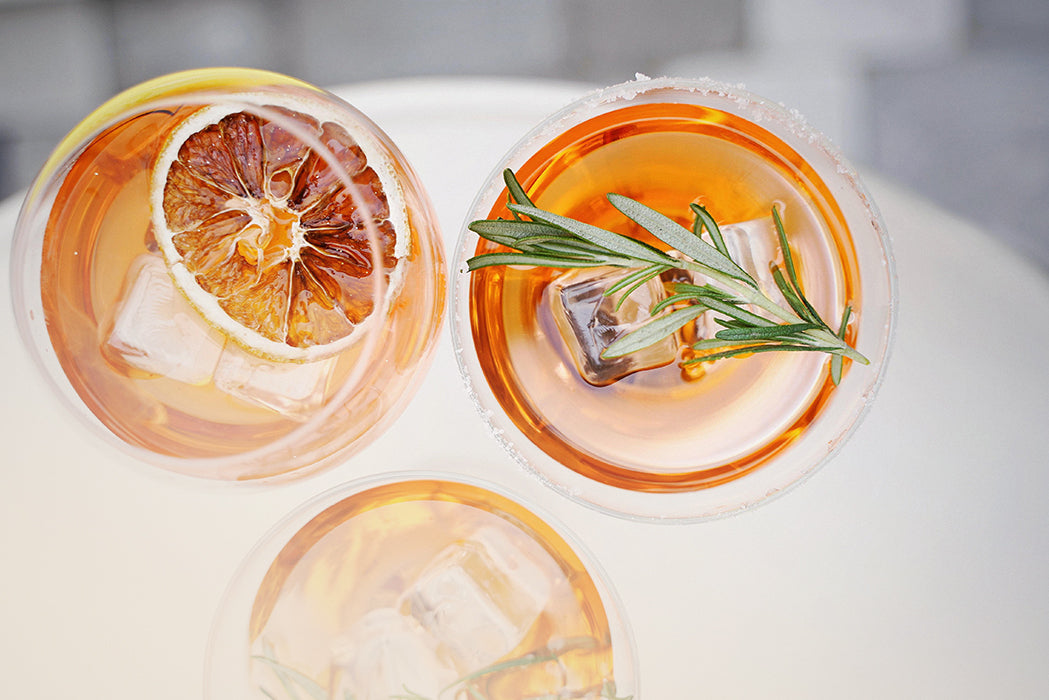
4. Pear-Rosemary Kombucha – a surprising combination
You probably know rosemary mainly from savory dishes. But the aromatic herb also pairs wonderfully with sweet fruit. Together with pear and kombucha, an elegant drink with a delicate herbal note is created – perfect if you want to try something new for once.
Ingredients for 1 glass
- 200 ml Original kombucha
- ½ ripe pear
- 1 small sprig of fresh rosemary
- 1 tsp lemon juice
- Optional: 1 tsp honey or maple syrup
- Ice cubes to taste
Preparation
- Wash the pear, remove the core, and cut the flesh into small pieces.
- Puree the pear with the lemon juice. Strain the puree if necessary.
- Put the pear puree in a glass and add the rosemary sprig.
- Fill the glass with kombucha and stir gently.
- Let the rosemary steep briefly in the drink. Remove it as soon as the aroma is intense enough for you.
My tip: For a particularly beautiful look, you can stick a thin pear slice to the rim of the glass. Use rosemary sparingly so that its strong aroma does not overpower the fruit.
5. Apple-Pear Kombucha with Cranberry – fruity and slightly tart
Can't decide between apple and pear? Then simply combine both! Cranberries bring a fruity-tart note to the glass and provide a nice color contrast. This drink tastes particularly good if you want to combine sweet and tart flavors.
Ingredients for 1 glass
- 200 ml Original kombucha
- ¼ apple
- ¼ pear
- 1 tbsp cranberries, fresh or thawed
- 1 small pinch cinnamon
- 1 tsp lemon juice
Preparation
- Wash the apple and pear, remove the core from each, and cut the fruit into small pieces.
- Puree the apple, pear, cranberries, and lemon juice together.
- Put the fruit puree in a glass and add a small pinch of cinnamon.
- Slowly pour in the kombucha and stir gently.
- Garnish the drink with a few cranberries or a thin apple slice and serve immediately.
My tip: If you use dried cranberries, keep in mind that they are often additionally sweetened. For a tartier version, you can use a little more cranberry and less apple.
How to make your autumnal kombucha drinks a success
With a few simple tricks, you can vary the recipes completely to your taste and get the best out of the seasonal ingredients.
Choose ripe, seasonal fruit
Ripe apples and pears bring an intense aroma. Particularly sweet pears pair well with spicy ginger or aromatic herbs. Tart apples, on the other hand, harmonize wonderfully with cinnamon and maple syrup.
Play with spices
Cinnamon, cardamom, cloves, and ginger pair perfectly with autumnal fruits. Start with small amounts and add a little more if necessary. This way, you will find the balance between fruitiness and spice.
Preserve the carbonation
It is best to use well-chilled kombucha and pour it slowly into the glass. Stir only gently so that as much carbonation as possible is preserved. Fruit purees can reduce the carbonation – this is completely normal.
Prepare fresh and enjoy immediately
Since you are adding fresh fruit and puree, it is best to drink the drinks immediately after preparation. If you want to store them briefly, place them in the refrigerator covered and consume them as soon as possible.
Important: Do not fill the finished mixtures into tightly sealed bottles to let them continue to ferment at room temperature. Additional fermentation can build up pressure. No second fermentation is necessary for these recipes.
Conclusion: Kombucha makes autumn taste even more varied
Whether apple-cinnamon kombucha, pear-ginger drink, or a fruity mixture with cranberry – with seasonal fruit and selected spices, you can easily rediscover kombucha. The recipes can be easily prepared at home and adapted to your preferences.
Try different types of fruit, experiment with spices, and find out which combination tastes best to you. This way, you bring variety to your autumn routine – without elaborate preparation.
Which recipe do you want to try first? Perhaps your personal favorite will be the spicy apple-cinnamon kombucha or the surprising combination of pear and rosemary. 🍎
Frequently asked questions about autumnal kombucha recipes
Which kombucha pairs best with apple and cinnamon?
A mild Original kombucha pairs particularly well with apple and cinnamon, as its fruity and tart notes complement the spices. For a spicier version, you can also try Ginger kombucha.
Can I use pear juice for kombucha recipes too?
Yes, you can use pear juice instead of fresh pear. Try to choose a juice without added sugar. Start with a small amount and adjust the mixing ratio to your taste.
Can you drink kombucha warm in autumn?
Kombucha is often drunk chilled. If you prefer to enjoy it lukewarm, you should only warm it gently and not boil it. High temperatures can affect the live microorganisms contained within. Chilled kombucha is used for the recipes in this article.
How long do homemade kombucha drinks last?
They taste best freshly prepared. The fresh fruit can cause the flavor and consistency to change quickly. Store leftovers covered in the refrigerator and consume them as soon as possible. Do not store the mixtures at room temperature in tightly sealed bottles, as pressure can build up.
Which spices pair well with kombucha?
Cinnamon, ginger, cardamom, and a small pinch of cloves pair well with kombucha, among others. Rosemary can also create an exciting combination with pear or apple. Use spices sparingly at first and adjust the amount to the fruit and the tartness of the kombucha.






Share: